How to Start Forex Trading from Scratch with a Systematic Approach
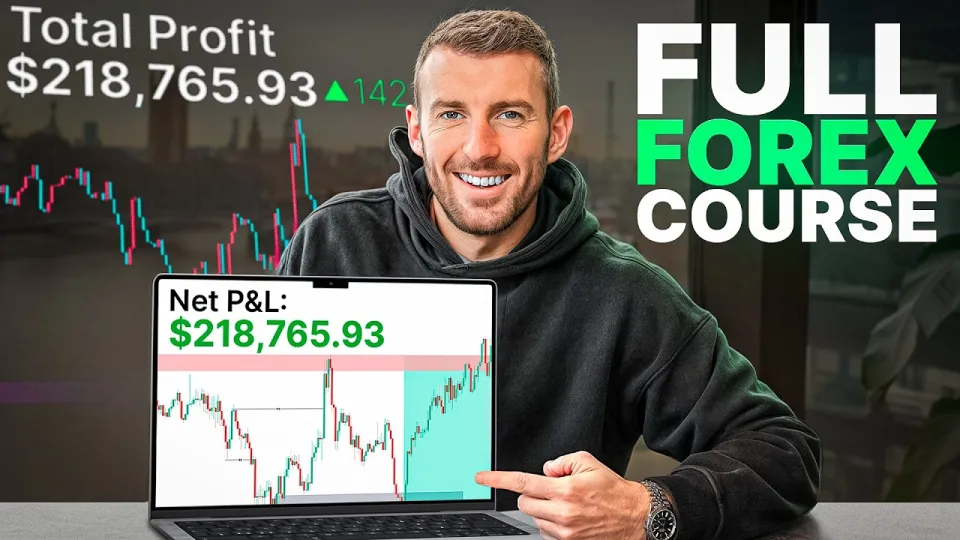
Video: Beginners Guide To Forex Trading In 2026 (+3 hours)
You can order the same kind of articles for your own video to boost it on YouTube and Google. Just message the Telegram bot @sat_sit_bot. Articles with your video embedded are written and posted by the bot itself — on popular topical sites (no ads). Try it free: 50 articles on us.
Key takeaways
- Forex is a decentralized over-the-counter market with daily volume exceeding $7 trillion.
- Most retail traders lose money due to poor risk management and lack of a defined strategy.
- Understanding market microstructure—bid, ask, spread, and order book—is essential for reading price action.
- A complete trading plan includes entry criteria, exit rules, position sizing, and journaling.
- Backtesting and journaling are non-negotiable steps to build consistency.
Forex trading is the act of buying and selling currency pairs on the foreign exchange market, and to start successfully you need a systematic approach that covers market mechanics, risk control, and psychology. Begin by learning how price actually moves—through order flow and liquidity—rather than relying on geometric patterns. A free structured course from Photon Trading provides the foundation: get the free Photon Trading course and cheatsheets.
What forex trading really is and how the market works
Forex is a decentralized global marketplace where currencies are traded over the counter (OTC) through a network of banks, brokers, and liquidity providers. Unlike stocks, there is no central exchange; prices are quoted by liquidity providers and aggregated by brokers. The daily turnover exceeds $7 trillion, making it the most liquid market in the world. Retail traders access it via brokers offering leverage, typically from 1:1 to 1:500 depending on regulation. The goal is to profit from changes in exchange rates, but success requires understanding the underlying dynamics—who is buying and selling, and why.
Why technical analysis alone fails and what to use instead
Technical analysis—chart patterns, indicators, and candlestick formations—often gets a bad reputation because it ignores the true drivers of price: market dynamics and order flow. Geometric shapes do not explain why price moves; they only describe what has already happened. To build a reliable strategy, you must understand how orders are executed, how liquidity is provided, and how imbalances between buyers and sellers create movement. This means studying market microstructure, auction market theory, and order flow. Only then can you interpret technical signals in context and avoid false breakouts and fake patterns.
Key concepts: market microstructure and order flow
Market microstructure deals with the mechanics of trading: bid price (what buyers are willing to pay), ask price (what sellers are asking), and the spread (difference between them). The order book shows pending orders at each price level, revealing where liquidity sits. Auction market theory explains that price moves to facilitate trade—seeking areas where buyers and sellers agree. Order flow is the real-time record of transactions, showing whether aggressive buying or selling is dominating. By reading order flow, you can anticipate short-term price direction and identify high-probability entries. These concepts form the backbone of any serious forex strategy.
Building a trading strategy step by step
A robust trading strategy is built on market structure, not arbitrary indicators. Start by identifying the three types of structure: trending, ranging, and transitional. Then apply premium and discount zones—buying in discount, selling in premium—to align with institutional order flow. Use multi-timeframe analysis to confirm direction: a higher timeframe for bias, a lower for entry. Incorporate supply and demand zones and liquidity concepts (e.g., stop hunts, order blocks) to pinpoint reversals. Define precise entry triggers, such as a break of structure with displacement, and set stop-loss and take-profit levels based on the next liquidity pool. This systematic approach removes guesswork and emotional decisions.
Money management and psychology for beginners
Money management determines survival: risk no more than 1–2% of your account per trade, and use position sizing to keep losses small. A common rule is to risk a fixed dollar amount, not a fixed lot size. Trading psychology is equally critical—fear and greed lead to premature exits or oversized positions. Develop a trade plan that specifies your risk parameters, entry/exit rules, and daily loss limits. Journal every trade to identify behavioral patterns. Many beginners fail because they master neither the strategy nor their emotions; build your edge first, then work on discipline. The free Photon Trading course includes cheatsheets to help you structure this process.
Common questions and pitfalls answered
New traders often ask: how much capital do I need? There is no fixed minimum, but starting with at least $500–$1,000 gives room to manage risk properly. Another common doubt: can I trade other people's money? Yes, through prop firms or managed accounts, but that requires a proven track record. Many struggle with information overload—jumping between videos without a coherent system. The key is to follow one structured path, like the one outlined in this guide, and avoid chasing quick profits. Finally, backtesting is non-negotiable: test your strategy on historical data before risking real money. These answers come from real trader experiences and address the most frequent stumbling blocks.
Useful resources
- Free Photon Trading course and cheatsheets
- Photon Trading mentorship program
- Free Telegram channel with analysis and trade recaps
- Photon Trading on Instagram
Final thoughts
Starting forex trading requires a shift from pattern-hunting to understanding market mechanics, risk control, and psychology. The systematic approach outlined here—covering microstructure, order flow, strategy development, and money management—gives you a solid foundation. For a complete, free walkthrough, watch the full beginner's guide by Matt Donlevey - Photon Trading, which condenses years of experience into a structured course. Begin with the free Photon Trading course and cheatsheets to accelerate your learning. Remember: consistency and discipline matter more than any single indicator.
Source: Beginners Guide To Forex Trading In 2026 (+3 hours) · Markdown version
Questions & answers
How much money do I need to start forex trading?
There is no strict minimum, but starting with at least $500–$1,000 is recommended to manage risk properly. Many brokers allow micro-lots, so you can begin with less, but small accounts limit your ability to absorb losses and learn effectively.
Can I trade forex without a deep understanding of economics?
Yes, but you need to understand market dynamics and order flow. Economics helps with fundamental context, but a systematic technical approach based on microstructure and liquidity can be sufficient for short-term trading. Focus on price action and risk management first.
Is technical analysis useless in forex?
Technical analysis is not useless, but it is often misused. Patterns and indicators describe price but do not explain why it moves. Combine technicals with market microstructure and order flow to understand the underlying dynamics and improve decision-making.
How long does it take to become consistently profitable?
It varies, but most traders need at least 1–2 years of dedicated practice, backtesting, and journaling to develop consistency. The key is to follow a structured plan, manage risk, and treat trading as a skill that requires deliberate practice.